
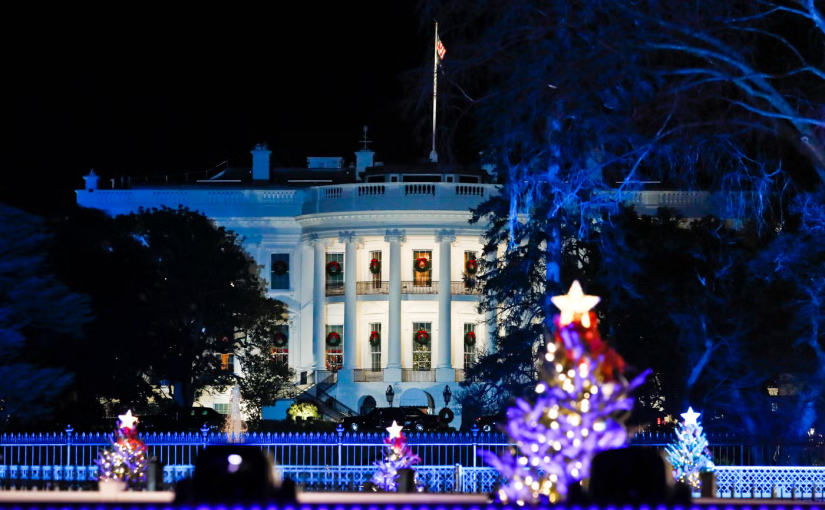
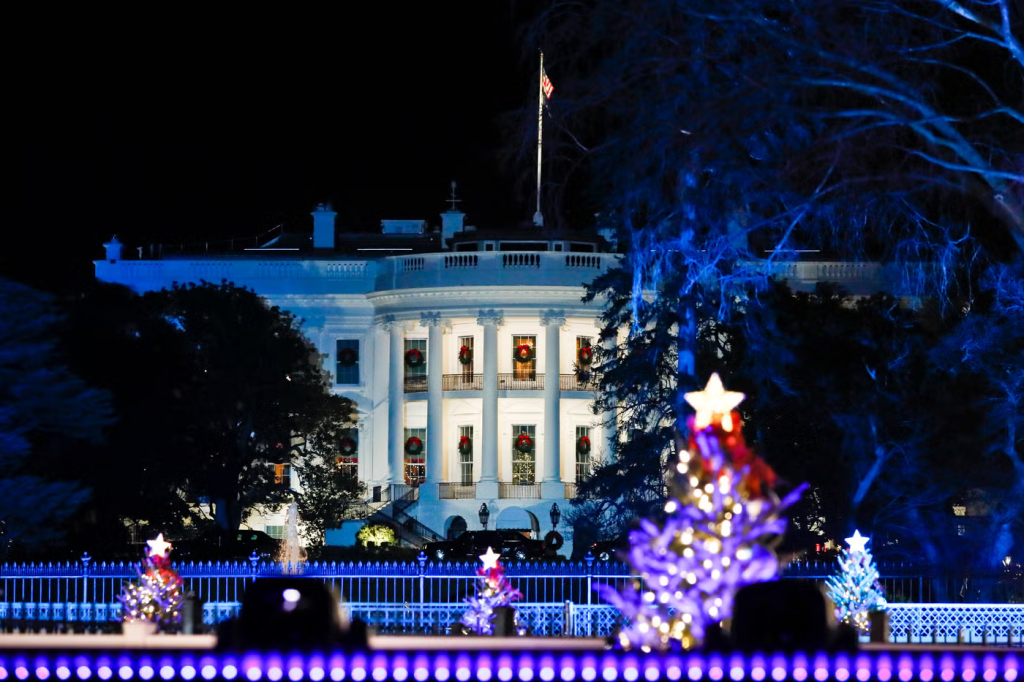
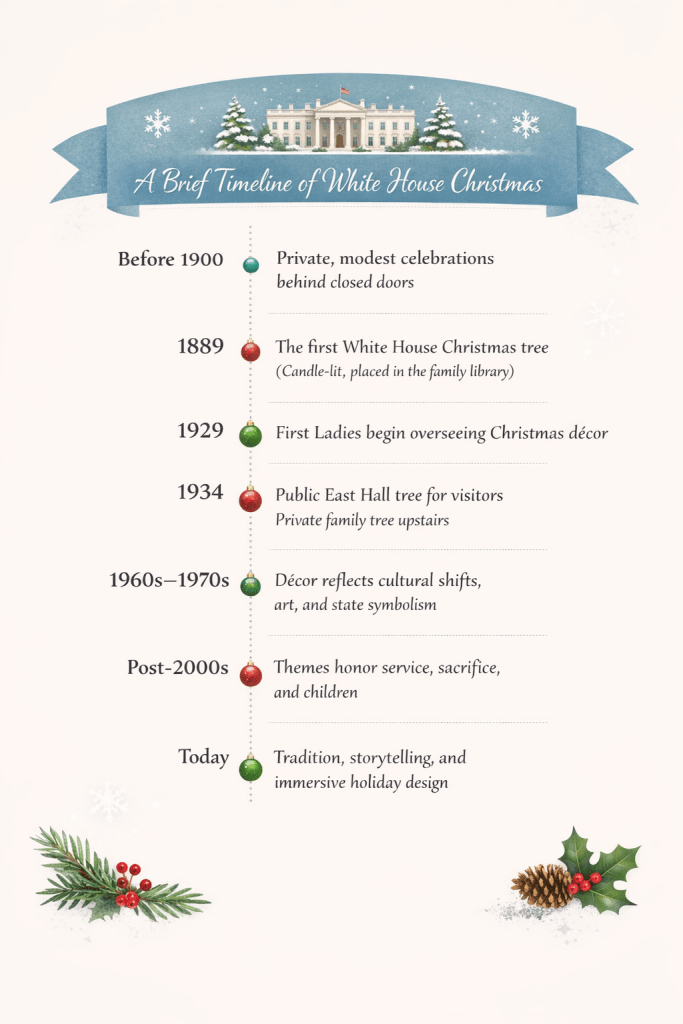
Christmas at the White House wasn’t always the big, extravagant spectacle we know today. In the earliest years, the president and his family decorated quite simply — and privately — with greenery, candlelight and quiet celebrations shared behind closed doors.
As time passed and new families arrived, they brought their own traditions and personal taste to the way the White House was decorated. Some were stunning, others a little more peculiar — but as Christmas grew into a national tradition, the White House embraced it and evolved alongside it.
What may have started as modest family traditions slowly grew into something more. Over the years, White House Christmas décor began to reflect the mood of the nation — honoring service and sacrifice, celebrating children, and reminding the public that the White House isn’t just a symbol or a landmark. At its heart, it’s a home.
Inspired by a recent visit to the Gaylord at National Harbor — and catching a glimpse of the Washington Monument in the distance — I found myself wondering what the White House might look like inside this holiday season, and how all of these traditions began.
Even one of the most notable homes in the world tells its story at Christmas.
👗 The First Lady’s Touch
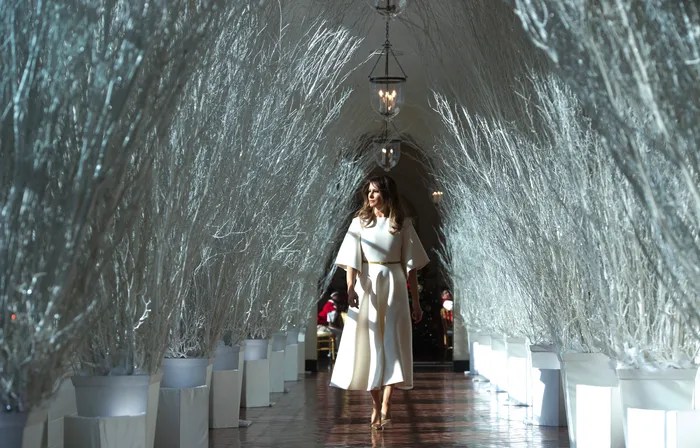
While the White House itself tends to remain constant, its Christmas décor changes every year — and for that, we have the First Lady to thank. Each season brings a fresh perspective, shaped by the woman who holds it all together, and offers her the opportunity to highlight what matters most to her.
Since the late 1920s, First Ladies have overseen the holiday decorations throughout the White House, influencing not only how the rooms look, but what the décor represents. Some leaned into tradition. Others reflected cultural moments, honored service members, or focused on children and family. A few weren’t afraid to take creative risks.
That’s what makes White House Christmas décor so fascinating. It isn’t just about what’s trendy at the time. It evolves — quietly reflecting the moment it was created in, part personal expression and part national storytelling.
🎄 A Classic Beginning: The Kennedy Nutcracker Tree
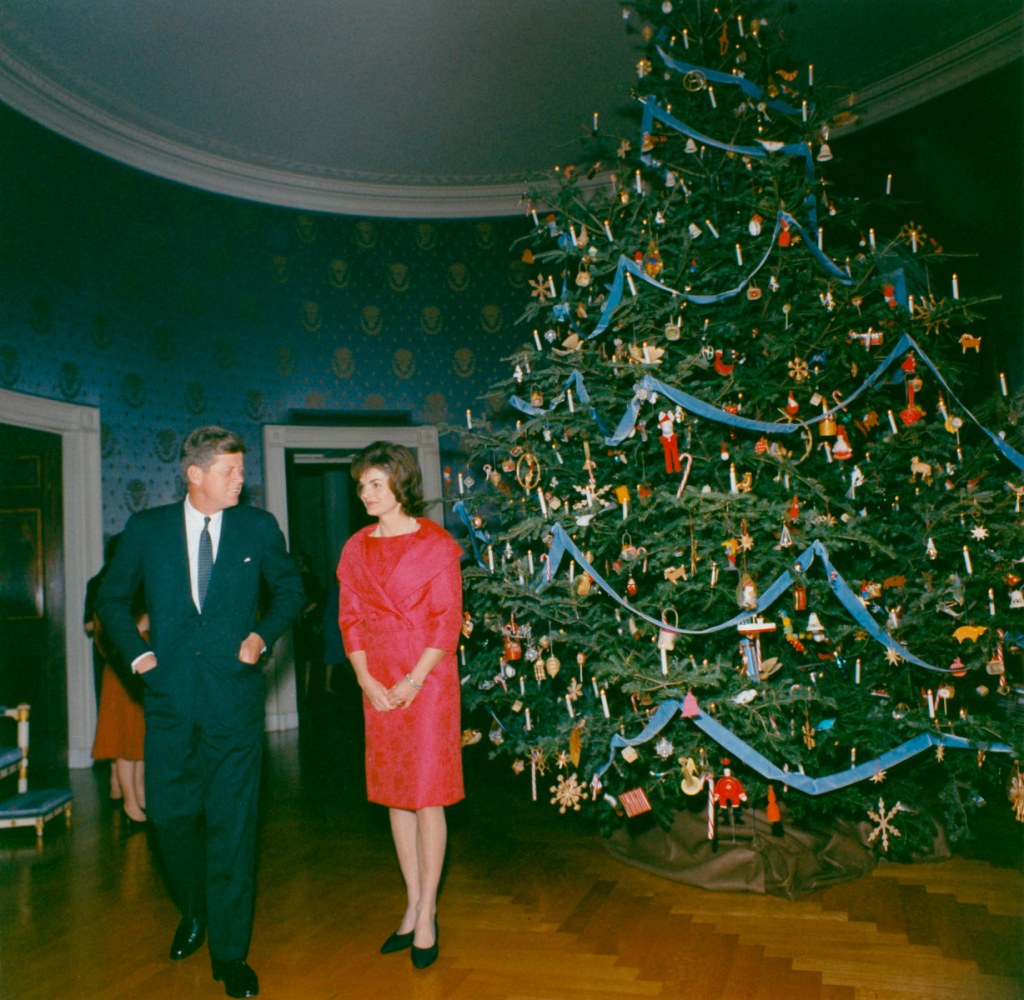
If I had to start anywhere, it would be with the Kennedy White House — a moment when Christmas décor felt both refined and magical. During Jacqueline Kennedy’s time in the White House, holiday decorations embraced a classic Nutcracker theme, drawing inspiration from ballet, tradition, and Old World charm.
The Nutcracker feels like the perfect choice for this home. It’s timeless, elegant, and rooted in storytelling — not flashy or trendy. The décor blended the formality of the White House with the kind of Christmas magic so many of us remember from childhood.
Why this one stood out to me:
There’s something incredibly comforting about starting with a classic. The Nutcracker theme feels universally familiar — a reminder of holiday performances, family traditions, and stories passed down year after year. In a home as historic as the White House, this kind of décor feels especially fitting. It honors tradition while still inviting wonder inside.
This look feels like a foundation — the kind of Christmas that doesn’t need explanation. It simply is. And that’s what makes it unforgettable.
🧸 A Storybook Tree You Either Loved or Hated
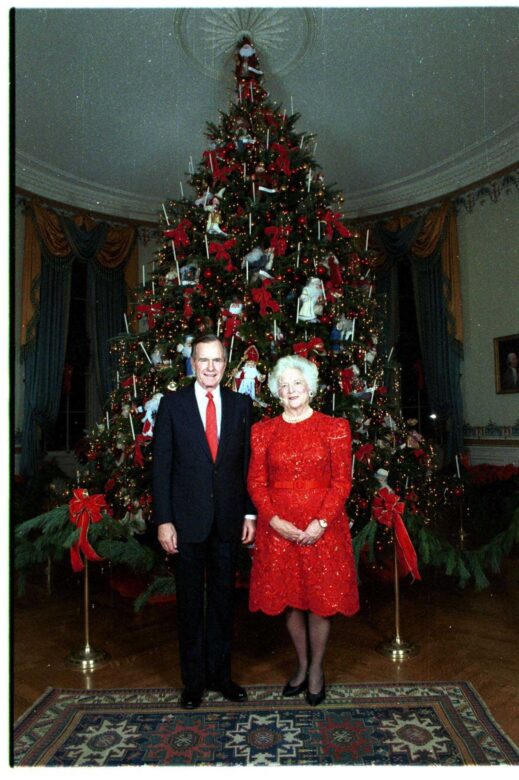
One White House Christmas tree that always makes me pause is the 1989 Storybook Doll Tree, created during Barbara Bush’s first holiday season in the White House. The tree was decorated with dolls inspired by popular children’s books — instantly memorable and definitely a conversation starter.
This was not a subtle look. It was bold, playful, and unapologetically story-driven. The dolls brought familiar characters to life, turning the Christmas tree into something closer to a bookshelf or a bedtime story than traditional holiday décor.
Why this one stood out to me:
Hate it or love it, this tree was clever. It leaned fully into childhood imagination and wasn’t afraid to be different. What I love most is that it made people feel something — it sparked reactions, invited conversation, and decades later, we’re still talking about it.
In a home as formal and historic as the White House, choosing a tree centered on children’s stories felt intentional and warm. It’s a reminder that Christmas décor doesn’t always have to be elegant to be meaningful — sometimes it just has to tell a story that sticks.
🎖️ A Season That Focused on “Home” After 9/11
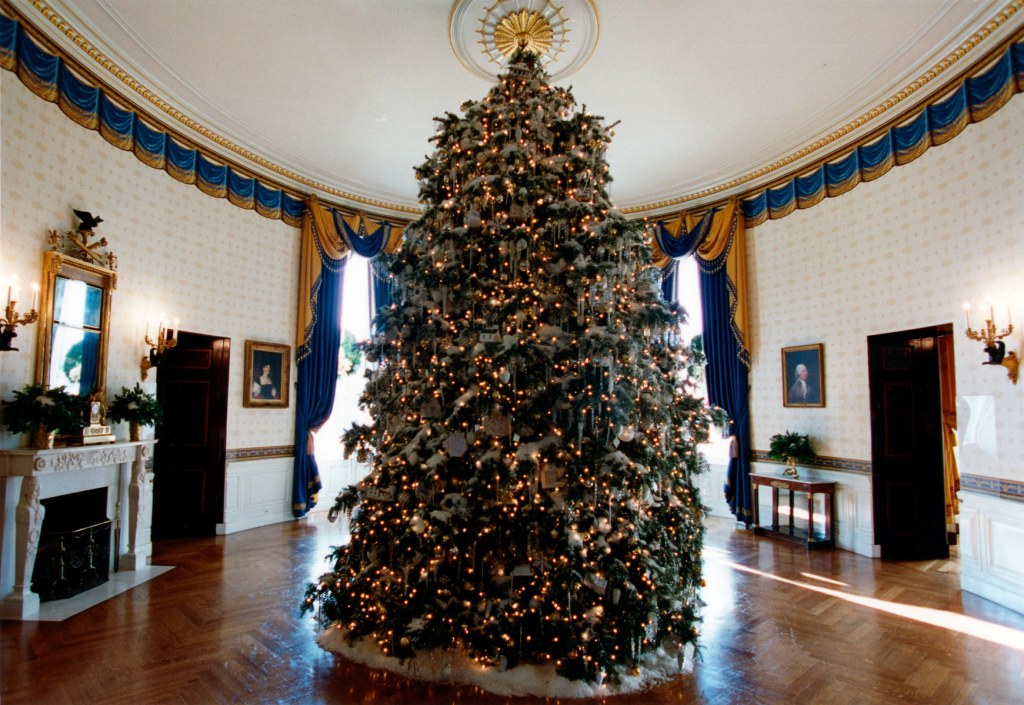
One White House Christmas moment that truly stayed with me came during Laura Bush’s first holiday season following September 11, 2001. That year, the overall theme was “Home for the Holidays,” and it reflected a national shift toward comfort, connection, and compassion.
Rather than centering the season around extravagance, the White House leaned into the idea of home — acknowledging that many families, service members, and first responders were spending the holidays apart. The décor and messaging focused less on spectacle and more on presence, familiarity, and togetherness.
Why this stood out to me:
What I love most about this season is its sensitivity. It wasn’t about impressing visitors or making a statement — it was about recognizing absence. It acknowledged that for many families, Christmas looked different that year, shaped by distance, uncertainty, and sacrifice.
There’s something incredibly powerful about using the holidays to hold space for people who aren’t in the room. In a home that represents the nation, this quieter, more thoughtful approach felt deeply human — a reminder that sometimes the most meaningful decorations aren’t the ones that sparkle the most, but the ones that understand the moment.
One White House Christmas tree that truly stayed with me is the one created during Laura Bush’s first holiday season following September 11, 2001. That year, the theme was “Home for the Holidays,” and it carried a meaning far deeper than décor alone.
In the wake of 9/11, many military members, first responders, and families were separated during the holidays. Rather than leaning into extravagance, the White House focused on comfort, connection, and the idea of home — something so many people were missing that season.
Why this one stood out to me:
What I love most about this tree is its sensitivity. It wasn’t about impressing visitors or making a statement — it was about acknowledging absence. It recognized that for many families, Christmas looked different that year, shaped by distance, uncertainty, and sacrifice.
There’s something incredibly powerful about using holiday décor to hold space for people who aren’t in the room. In a home that represents the nation, this tree felt thoughtful, compassionate, and deeply human.
🇺🇸 A Tree That Represented Every State
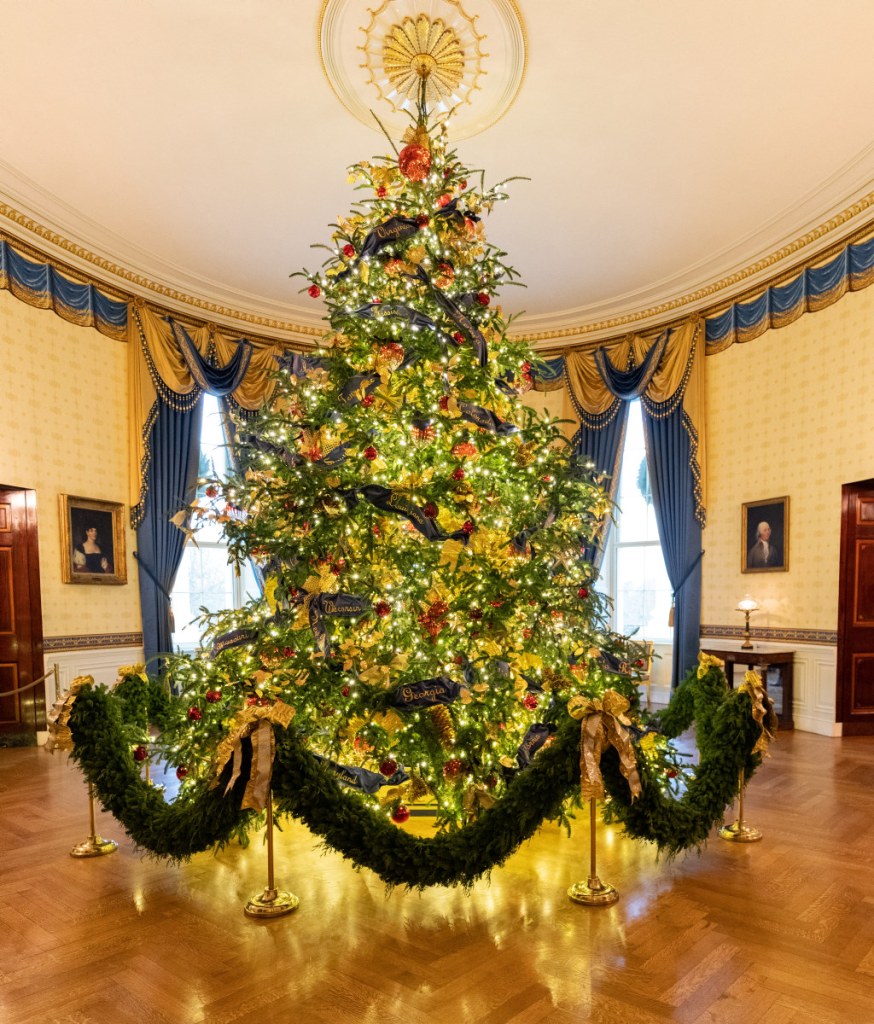
One White House Christmas tree that has always stood out to me is the 2017 Blue Room tree, designed during Melania Trump’s first holiday season. The theme that year was “Time-Honored Traditions,” and the tree was decorated with glass ornaments depicting the seal of every U.S. state and territory.
At first glance, the tree felt classic and elegant — exactly what you’d expect in the Blue Room. But the more you looked, the more meaning it revealed. Each ornament represented a state, giving every part of the country its own place on the tree.
Why this is one of my favorites:
I love how intentional this felt without being overdone. Every state was acknowledged individually, yet the tree still felt cohesive and timeless. In a home that represents the entire nation, that symbolism feels especially powerful.
There’s something grounding about seeing the country represented this way — quietly, beautifully, and all together. It’s a reminder that while every state has its own identity and story, they all belong in the same space.
✨ Seeing Christmas Through a Child’s Eyes
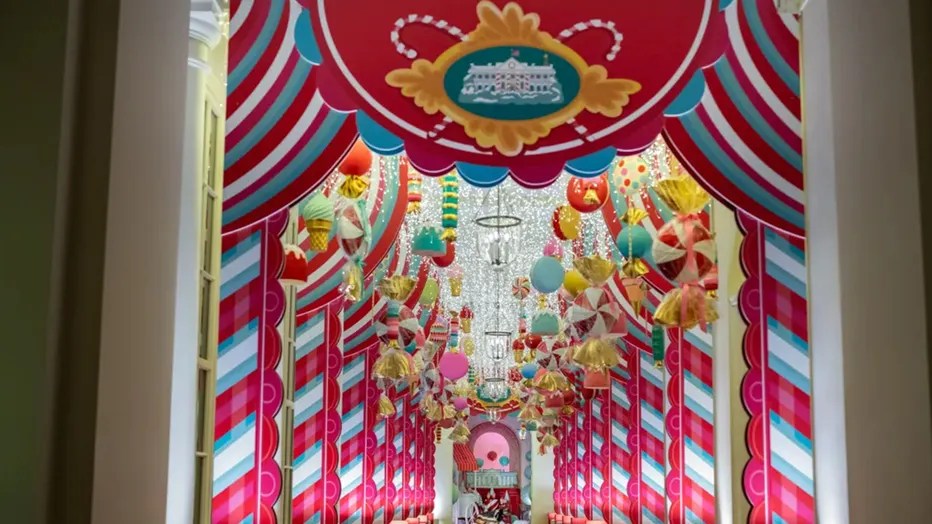
During Jill Biden’s time in the White House, Christmas décor often reflected a child-centered perspective — one rooted in presence, imagination, and wonder. That approach came through especially clearly in the 2023 theme, “Magic, Wonder, and Joy.”
Rather than focusing on grandeur or symbolism alone, the season leaned into how children experience Christmas: fully immersed, noticing every sparkle, color, and detail, and finding joy in the smallest moments.
Why this one stood out to me:
I loved the sentiment behind it. Christmas has a way of bringing out the child within all of us — inviting us to slow down, look closer, and feel the season instead of rushing through it. In a place as historic and formal as the White House, this softer, more playful lens felt refreshing and genuine.
This theme served as a quiet reminder that magic doesn’t have to be elaborate. Sometimes it’s found in wonder, imagination, and the simple act of being present — which may be the most meaningful holiday tradition of all.
✨ Honorable Mentions (Because These Were Too Fun Not to Mention)
Not every White House Christmas moment needs to carry deep symbolism to be memorable. A few stood out simply because they were bold, unexpected, or perfectly of their time.
✨ The Silver Tinsel Years
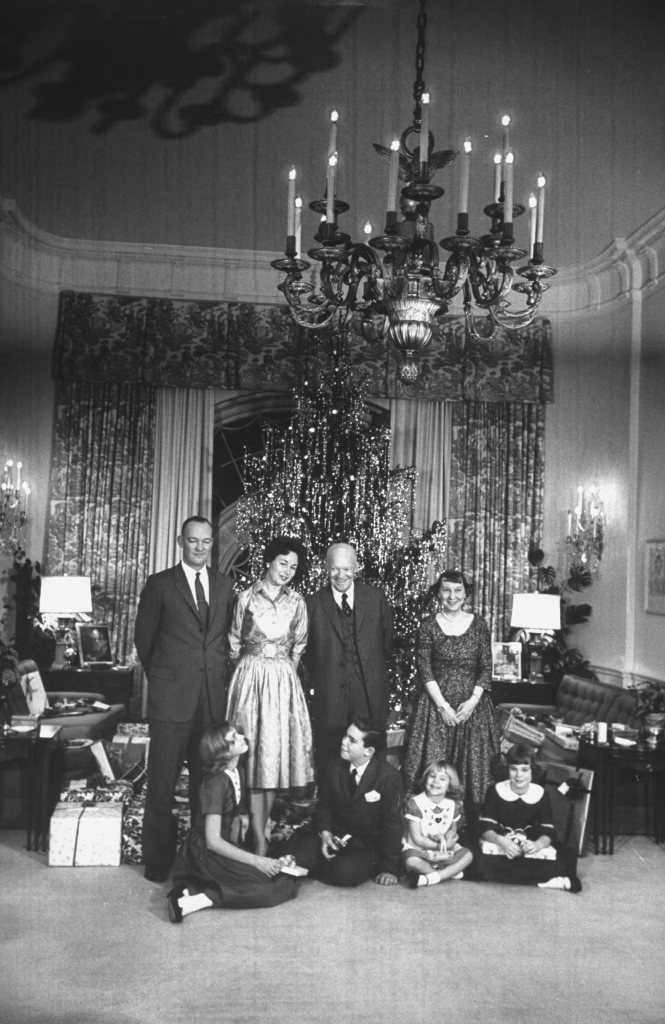
The 1960 White House Christmas tree during Dwight D. Eisenhower’s presidency leaned fully into silver tinsel — glamorous, polished, and unmistakably mid-century.
Why it stuck with me:
It’s such a classic move. Very era-appropriate — exactly what Christmas looked like then. Nostalgic in the best way.
🌈 The “Psychedelic” Tree
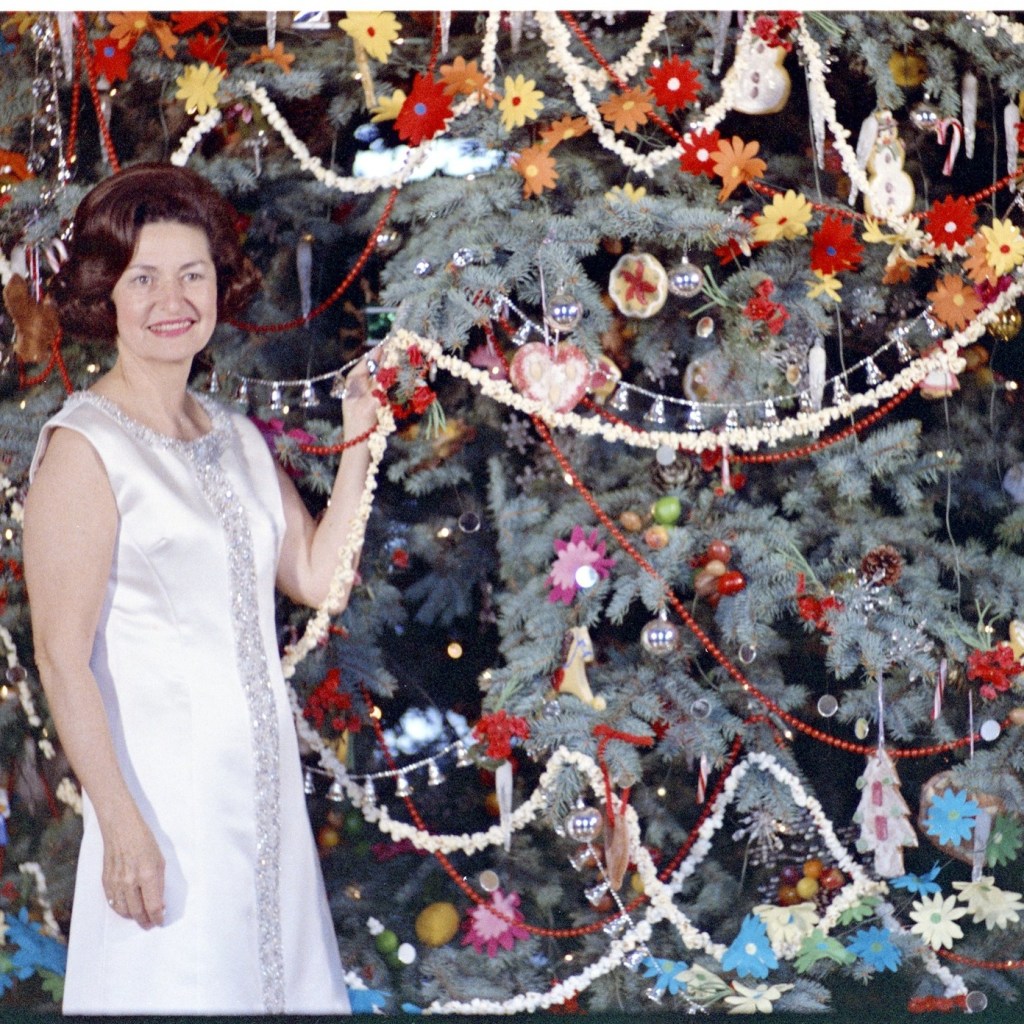
In 1967, Lady Bird Johnson embraced a colorful, eclectic look featuring popcorn garlands and a mix of ornaments that one magazine famously described as almost psychedelic.
Why it stuck with me:
Playful, unexpected, and a reminder that even the White House reflects the cultural moment it’s living in. You either loved it or you didn’t — but you definitely remembered it.
🎄 A Home at the Heart of It All
Across decades, styles, and stories, one thing stays the same: Christmas décor at the White House has always been about more than how it looks. It reflects the people living there, the moment in time, and the idea that even one of the most notable homes in the world is still — at its heart — a home. And maybe that’s why these trees stay with us long after the lights come down.

Your message has been sent












































 The Real Estate Housewife
Leave a comment